Blog
Bakery Fillings: How Rheology Controls Stability on Industrial Lines

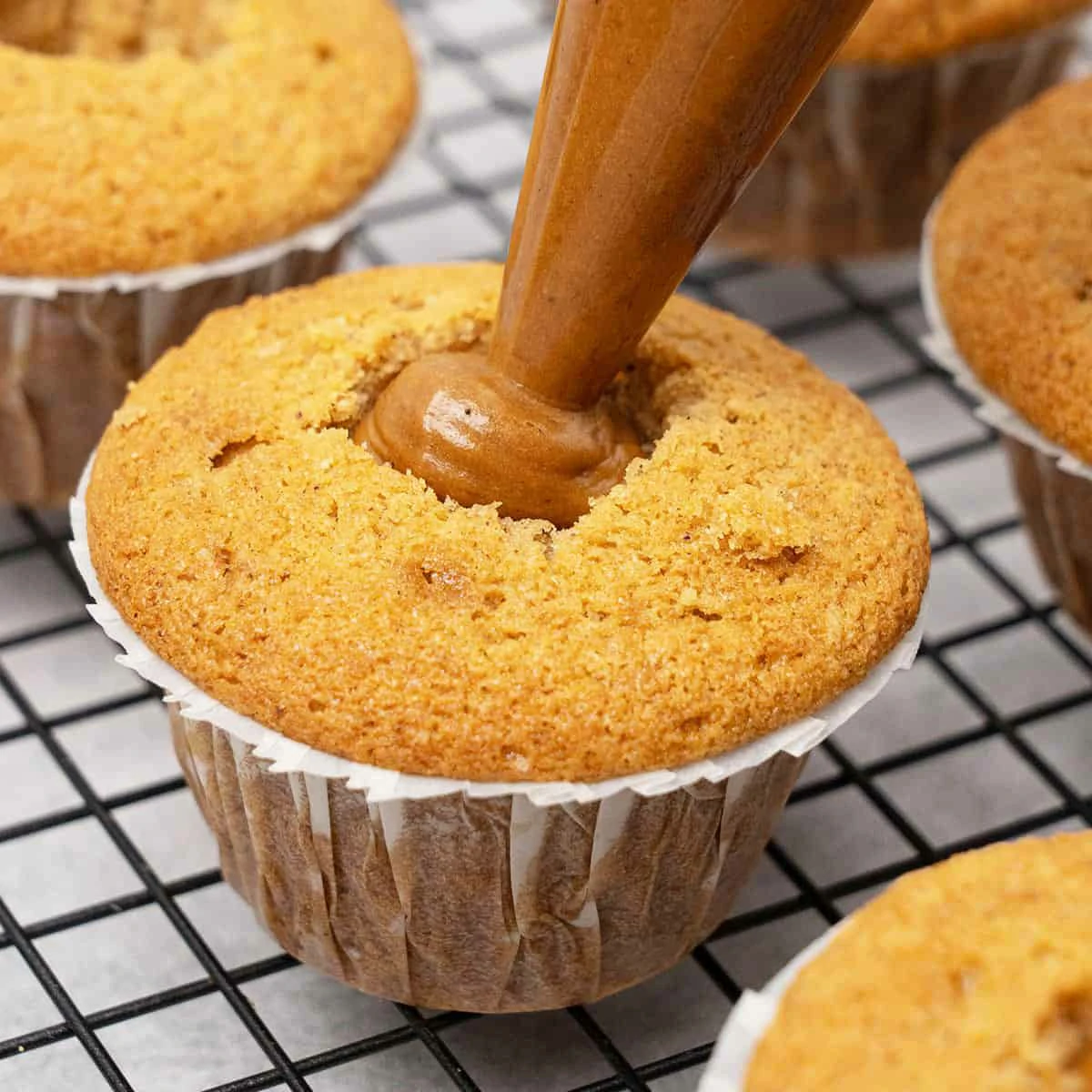
A bakery filling must do much more than taste good. On an industrial line it has to move through pumps and pipes, pass through a nozzle at a controlled rate, stop flowing after deposition, tolerate baking or cooling and remain stable during storage. When its flow behaviour is wrong, the result may be nozzle blockage, inconsistent weights, leakage, boil-over, soggy crusts or oil separation.
Rheology in practical terms
Rheology is the study of how a material deforms and flows. For bakery fillings, three properties are especially important:
- Viscosity: resistance to flow at a defined temperature and shear rate.
- Yield stress: the minimum force needed before the filling begins to move.
- Thixotropy: the ability to become thinner under mechanical action and rebuild structure when that action stops.
A single viscosity number rarely tells the whole story. A filling may appear thick in a container but flow easily through a pump because it is shear-thinning. After leaving the nozzle, it should recover quickly enough to hold its deposited shape.
Three common filling systems
Fruit and jam fillings
These are water-based systems built with sugar, fruit, acids, starches and hydrocolloids such as pectin or gellan gum. Their challenges include controlling water activity, preventing moisture migration, holding fruit pieces in suspension and avoiding boil-over during baking.
Anhydrous fat creams
These fillings contain little free water and rely on a fat crystal network to create structure. They are common in sandwich biscuits, wafers and injected bakery products. Crystal form and temperature history influence firmness, melt behaviour, graininess and oil migration.
Emulsion-based creams
Oil-in-water or water-in-oil systems combine two phases that naturally tend to separate. Emulsifier selection, droplet size, thickening and process shear determine whether the cream remains smooth and stable.
How ingredients build stability
Sugars do more than sweeten water-based fillings. They bind water, influence water activity, affect starch gelatinisation and help control crystallisation. The type and ratio of sucrose, glucose syrup and other carbohydrates influence body, sweetness and storage behaviour.
Starches and hydrocolloids create viscosity and yield stress. Their performance depends on pH, sugar concentration, calcium, temperature and mechanical treatment. Some gels break under pumping and do not recover, while shear-reversible systems rebuild after leaving the pump. The correct choice must therefore match the equipment as well as the desired finished texture.
In fat creams, stable fine crystals help trap liquid oil and produce a smooth texture. Poor temperature control can encourage larger crystals, leading to graininess or oiling-out. In emulsions, the hydrophilic-lipophilic balance of the emulsifier system must suit the continuous phase.
Temperature changes everything
Viscosity measured at room temperature may not predict behaviour in a heated depositor or an oven. A fruit filling that deposits correctly at 60°C may be too firm at 25°C and too fluid during baking. A fat cream may soften in a warm production area or become brittle after cooling. Specifications should therefore state the measurement temperature and, where possible, the relevant shear conditions.
Matching the filling to the equipment
Positive-displacement pumps can impose high shear. Long pipes create pressure losses. Small nozzles require lower viscosity during flow, while clean cut-off demands rapid structure recovery. Batch kettles may expose hydrocolloids to prolonged heat and acid, whereas short-time cooking can protect their functionality.
Useful line checks include deposit weight variation, nozzle pressure, product temperature, tailing or stringing, shape retention, leakage after baking and texture after cooling.
A reliable development process
- Define the application, target texture and shelf-life conditions.
- Record process temperatures, pump type, pipe length and nozzle geometry.
- Measure flow behaviour at conditions that represent the production line.
- Run a pilot trial and monitor both start-up and continuous operation.
- Evaluate the finished product after baking, cooling and storage.
Bee Master can help manufacturers compare filling and stabilisation options for specific bakery processes. The most dependable filling is not simply the thickest one; it is the system whose flow and recovery match every stage from mixing to shelf.
